
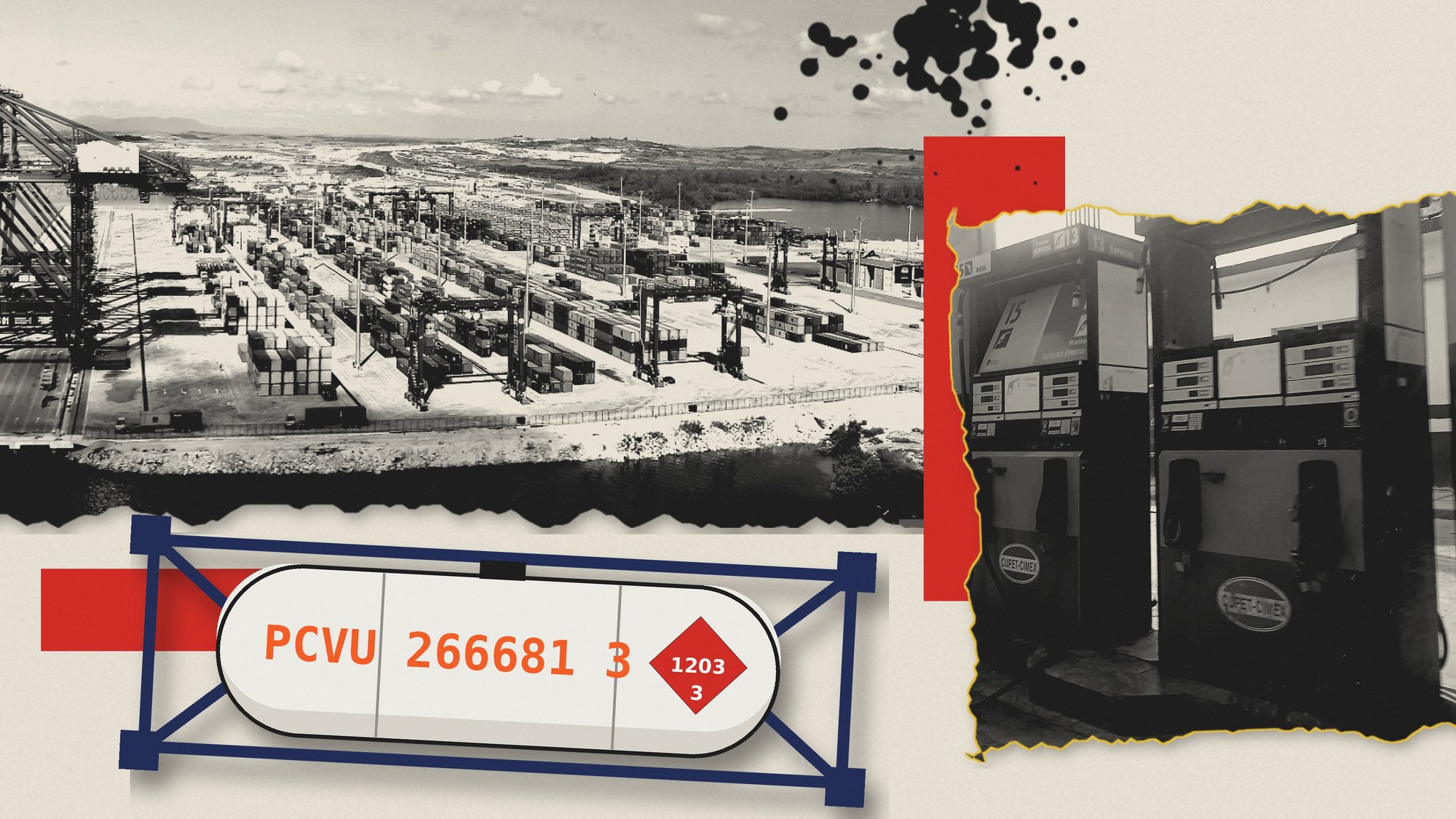
An invoice for almost $53,000 makes it possible to reconstruct how fuel imported from the United States and supplied by a Cuban private-sector business ended up in the hands of CIMEX, the corporation of the military conglomerate GAESA, sanctioned by Washington since 2004.
On September 21, CIMEX-Mariel invoiced one of its own Oro Negro service stations for more than 23,000 liters of gasoline. The order reference carried the initials KRV, which correspond to KRV Partes y Piezas, a private Cuban auto-services business, along with the number of an isotank: PCVU2666813.
On October 3, that same isotank returned empty from the port of Mariel to Miami aboard the Seaboard Ranger, declared with gasoline residue, according to shipping manifests. A source familiar with operations at the port of Mariel confirmed that KRV supplied the fuel to CIMEX-Mariel.
The transaction offers a view into a larger business.
Internal documents from CIMEX's commercial management, obtained by ADN Cuba, compile dozens of circulars issued between May and September 2026 and identify 21 fuel suppliers, at least 16 of them Cuban private-sector businesses.
Also listed are Cubamax, a Florida-based company registered alongside an unidentified importer; the state-owned CUPET; ITH, the Tourism Ministry's importer; Richmeat de Cuba, a subsidiary of Mexico's Richmeat; and a company identified as Talleres Castro.
The circulars record purchase, wholesale and retail prices. For private suppliers, CIMEX set prices between 17 and 30 cents per liter above the purchase price, margins of close to 10%.
The private businesses listed include KRV Partes y Piezas and Magenta Logística SURL, both based in Havana. Two sources, independent of each other and familiar with the respective operations, confirmed to ADN Cuba that KRV sold CIMEX at least one isotank of fuel in September and that Magenta did the same in July.
For KRV Partes y Piezas' gasoline, for example, the circular recorded a purchase price of $2.20 per liter and a retail price of $2.40, which shows that CIMEX builds a commercial margin into the fuel of private suppliers.
The mechanism contrasts with statements by Energy and Mines Minister Vicente de la O Levy, who told Reuters on October 12 that “no Cuban state company has managed to secure a fuel contract, whether for small or large quantities.”
The documents obtained by ADN Cuba, however, show a different route: CIMEX does not appear as a direct importer, but as a buyer of fuel supplied by Cuban private businesses.
At the bottom of a summary of circulars covering through September is a note: “MINFAR fuel is at cost price 2.50.” Although it does not identify the supplier, the volume or a specific transaction, the table records purchase prices of $2.50 per liter for Magenta, CEA and Morales between July and August. MINFAR is Cuba's Ministry of the Revolutionary Armed Forces.
The U.S. Support for the Cuban People (SCP) license exception allows fuel to be exported without an individual license for use by Cuba's private sector. However, guidance from the Bureau of Industry and Security (BIS), published in February 2026, states that the exception does not cover transactions that “primarily generate revenue for the state or contribute to its operation.” The agency warns that “it is the responsibility of exporters and reexporters to ensure compliance” with those conditions.
Secretary of State Marco Rubio was more explicit. On February 25 he warned that if the private sector were found to be “diverting [the fuel] to the regime or to the military enterprise,” the licenses would be canceled.
Circulars No. 4 and 17 also list “Importadora/Cubamax” as a supplier, a reference to Cubamax, a Florida-based company. CIMEX recorded its B-90 gasoline at $2.52 per liter in May and its diesel at $2.63 in June. The circulars do not identify the associated importer, nor do they establish whether those transactions were completed or under what export authorization they would have been carried out.
Cubamax, its president, Carlos Trujillo, and Tech Cargo, the freight agent listed on the return manifests for Cubamax isotanks, did not respond to repeated requests for comment sent by email. ADN Cuba also contacted Cubamax by phone.
The KRV operation
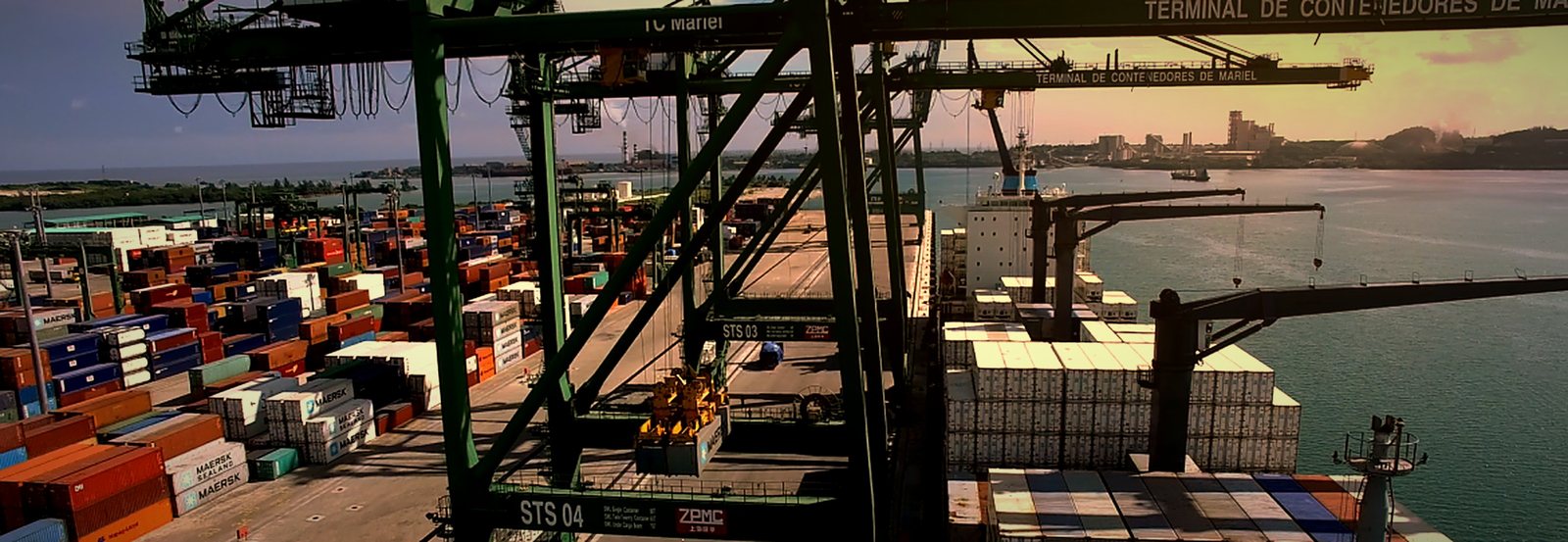
In KRV's case, the documentation goes beyond price quotes: a CIMEX-Mariel invoice and maritime records make it possible to reconstruct the route of an isotank and its connection to a gasoline sale to a state service station.
In September, two internal CIMEX circulars listed KRV Partes y Piezas as a supplier of B-90 gasoline: purchase price, $2.20 per liter; resale, $2.30 wholesale and $2.40 retail.
The invoice between CIMEX-Mariel and the Oro Negro station applies a price of $2.25 per liter: five cents above the purchase price recorded in the circular and five cents below the wholesale price set by CIMEX. The documents do not explain the difference.
The invoice reference includes an isotank identifier, PCVU2666813, which ADN Cuba traced in U.S. manifests. On October 3, the container returned empty from Mariel to Miami aboard the Seaboard Ranger, declared with gasoline residue.
A source familiar with operations at the port of Mariel confirmed that KRV supplied the fuel to CIMEX-Mariel.
A shipping agency behind the returns
The shipper of record for the return of KRV's tank is Agencia Marítima Taína S.A., incorporated in the British Virgin Islands with an office in Havana. Since at least 2020, Taína has appeared in manifests as the shipper of the empty containers that Seaboard Marine returns from Cuba to the carrier itself, a pattern typical of a shipping agent. Since April 2026, those shipments have included 1,628 isotank returns, most of them declared with fuel residue.
Andrés Ernesto Muñoz Campos, identified as the representative of Agencia Marítima Taína S.A. in a directory of member companies of the Cuban Chamber of Commerce, was listed as a director of Caroil Transport Marine, a now-dissolved Cypriot shipping company sanctioned by the Treasury Department in 2019 for carrying Venezuelan oil to Cuba.
Another director of the company was Guillermo Faustino Rodríguez López-Calleja, brother of Major General Luis Alberto Rodríguez López-Calleja, the late head of GAESA and father of Raúl Guillermo Rodríguez Castro (“El Cangrejo”). Muñoz Campos himself does not appear on any sanctions list so far.
Magenta's eight tanks
In June, CIMEX recorded Magenta's gasoline at $3.00 per liter, one of the highest prices in the circulars. Crowley tracking records show eight isotanks that left the Mariel terminal on July 2 and 3 and returned to Florida with Magenta as shipper; four of them had arrived in June declared by another company, Grupo Yes SRL. The records do not show which isotank corresponds to the confirmed sale or who bought the fuel.
From the port of Mariel to a state gas station
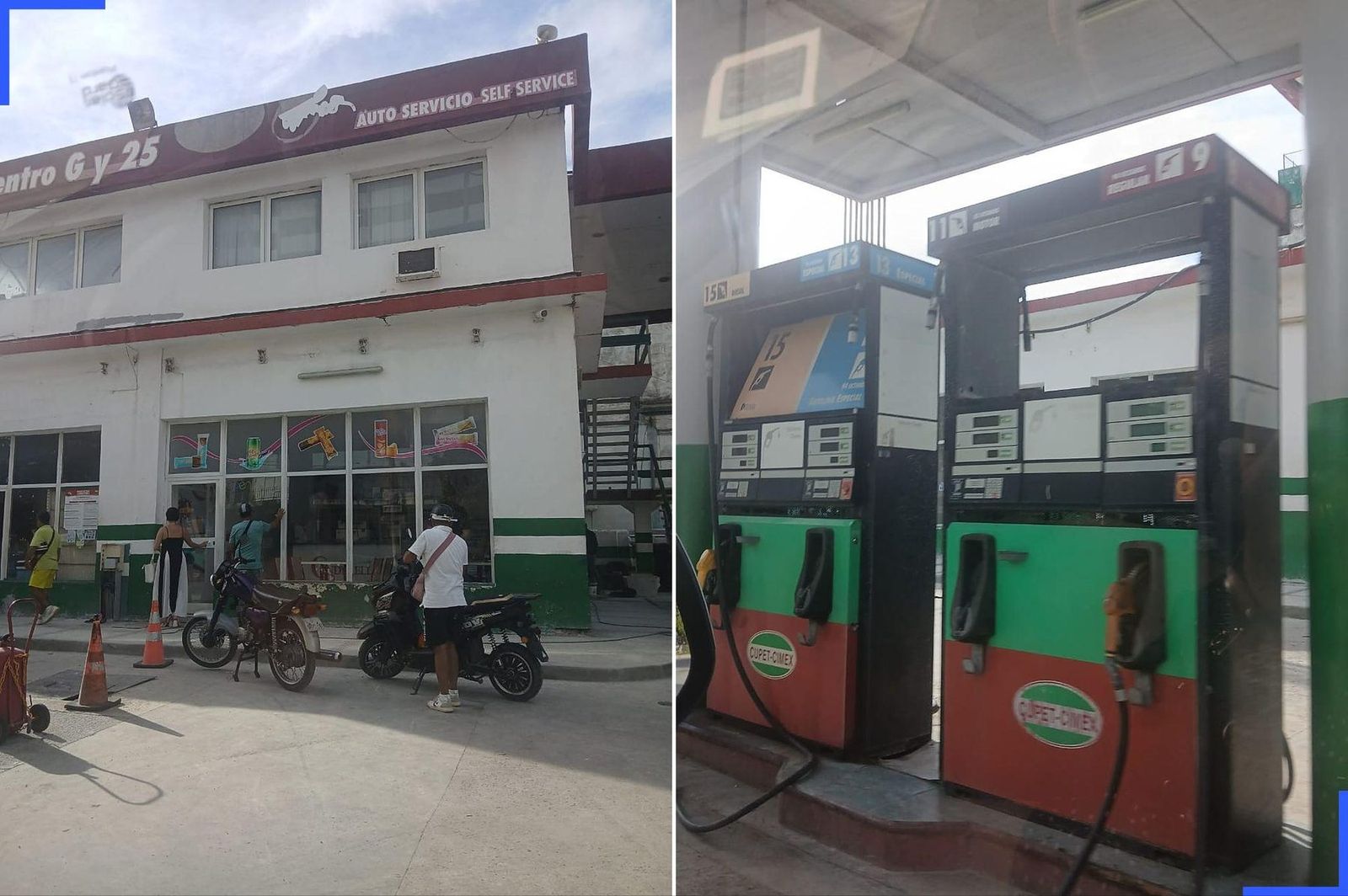
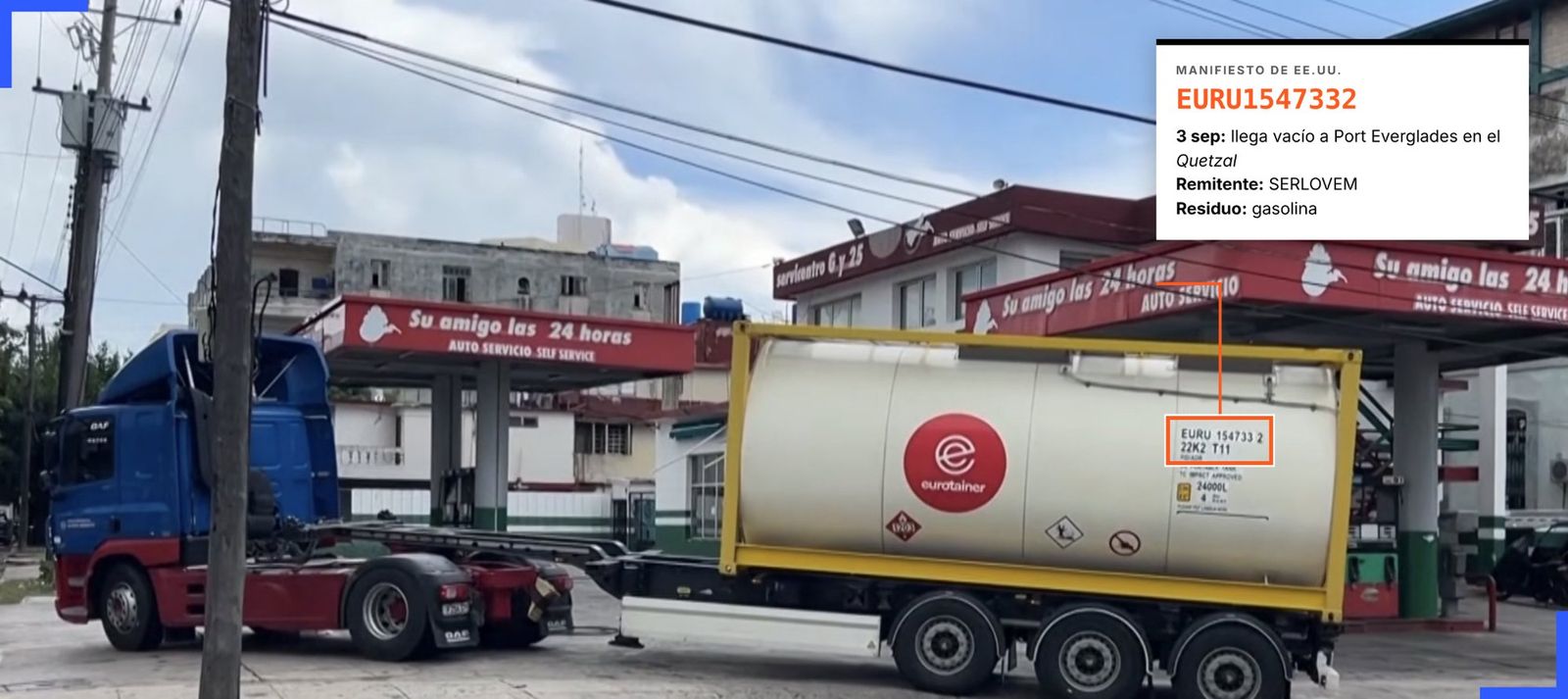
A Reuters photo taken on August 6 shows isotank EURU1547332, from the Eurotainer fleet, at the Cupet service station at G and 25th streets in Havana's Vedado district. According to Crowley's tracking, the tank was outside the Mariel terminal that day; it had left on July 27 and returned on August 8. A sales point of Cindyrella S.U.R.L. operates at that station, according to its Instagram account and a visit by ADN Cuba. Cindyrella appears in CIMEX documents as a supplier of diesel and gasoline. In late September, during the visit, the station had no electricity and its fuel pumps were empty.
Four weeks after the Reuters photo, on September 3, the tank arrived at Port Everglades aboard Crowley's Quetzal, declared with gasoline residue. The shipper was SERLOVEM SURL, a Havana-based importer linked to the state group GECOMEX, which OFAC sanctioned in July, and the consignee was Flash Kingz LLC, of Miami Gardens, according to the import manifest. The public manifest identifies only the shipper and the consignee; neither that record nor the photo reveals the final buyer of the fuel or links the tank to Cindyrella.
The case is not isolated. Since May, SERLOVEM has appeared as the shipper of more than 440 isotank returns with fuel residue, consigned to 12 U.S. companies. Of those, 319 took place after July 13, when OFAC sanctioned GECOMEX.
SERLOVEM is headquartered in the building at 23rd Street No. 55, in Vedado, which also houses the Foreign Trade Business Group (GECOMEX). SERLOVEM's representative before the Commercial Registry, Marisabel Kindelan Mena, is a legal adviser to GECOMEX. CubaPLUS, a magazine co-published by the state news agency Prensa Latina, lists SERLOVEM as part of GECOMEX's portfolio.
The state, in the same circuit
The possibility of state entities buying fuel from these businesses had already been officially contemplated. On July 20, 2026, the provincial newspaper Escambray reported that the Ministry of Transportation had circulated a document, approved by the Council of Ministers, on the possibility of buying fuel from private businesses.
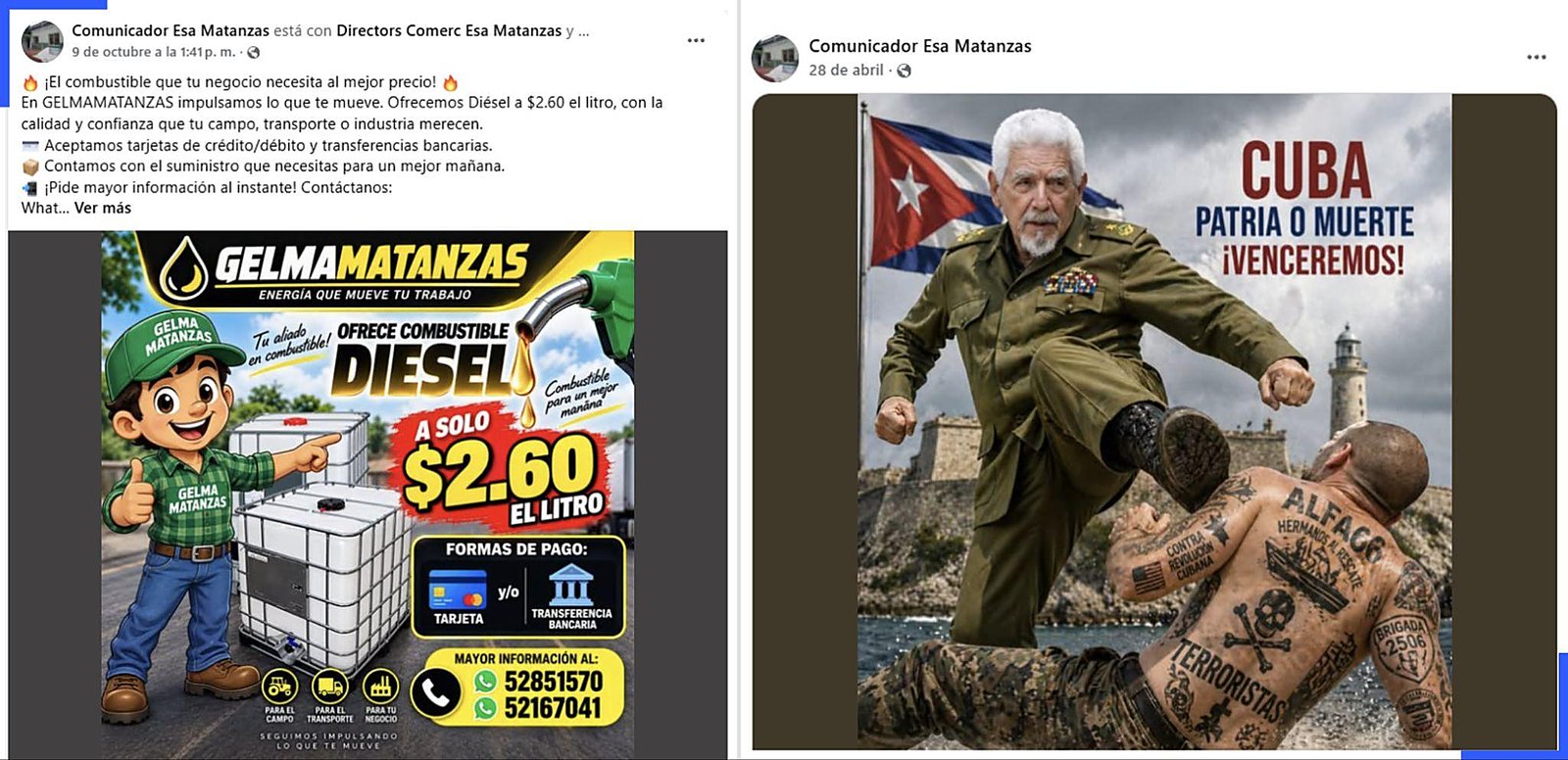
And by October, the Matanzas Agricultural Supply Company, part of the Agriculture Ministry's Logistics Business Group (Gelma), was advertising diesel on Facebook at $2.60 per liter, payable by card or bank transfer.
The same account does more than promote fuel. It also serves as a propaganda platform for the Cuban regime, with posts that glorify Fidel Castro and spread violent messages against Brothers to the Rescue (Hermanos al Rescate).
 1
2
1October 9. The state company offers diesel at $2.60 per liter, payable by card or transfer.

2April 28. The same account posts an image depicting Commander Ramiro Valdés, who died in June, kicking a man tattooed with Alpha 66, Brothers to the Rescue and Brigade 2506, under the word “terroristas” (terrorists).
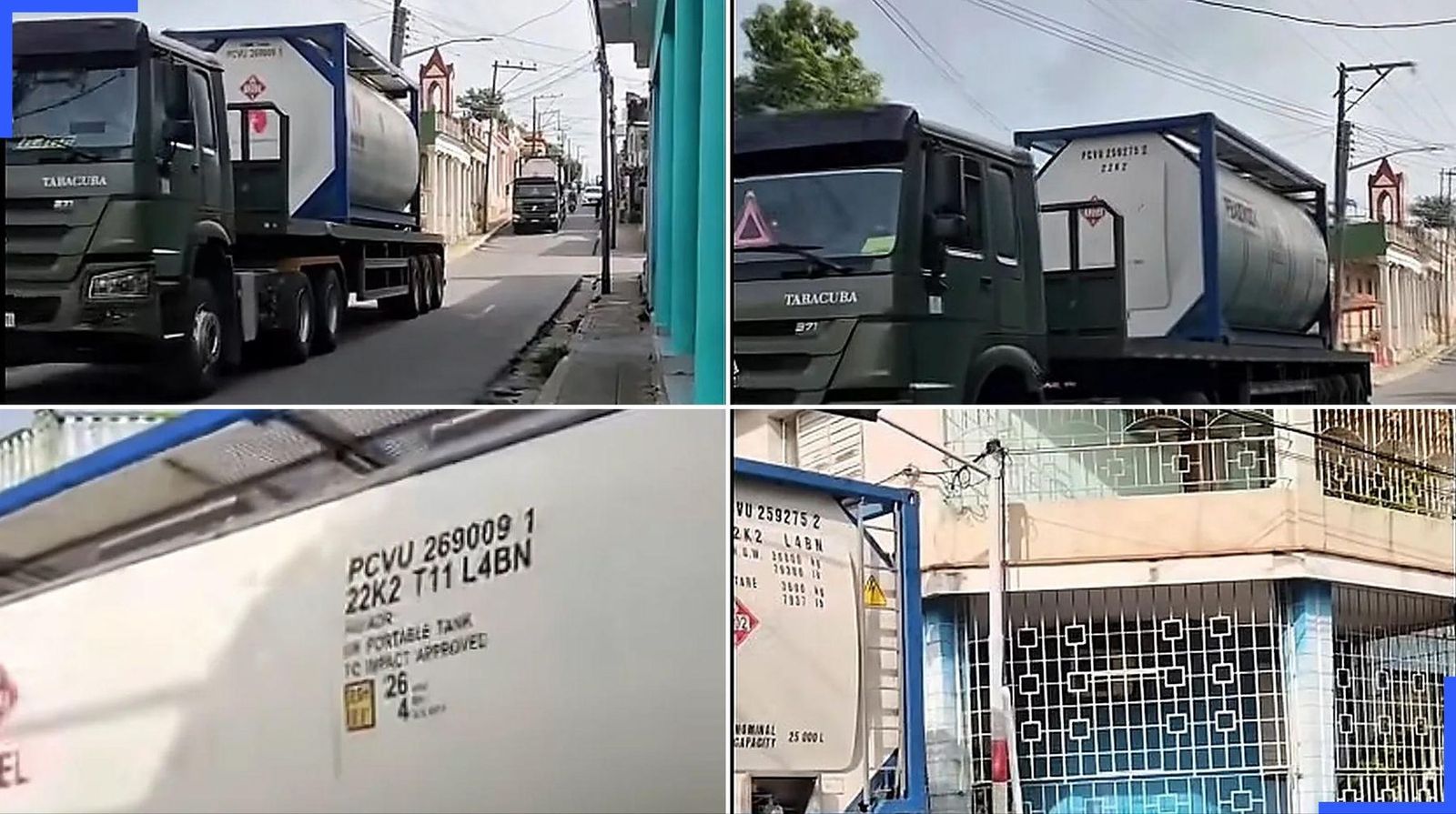
Another link to the state sector appears in Pinar del Río. A video shared on social media in early August shows two trucks belonging to Tabacuba, the state business group that controls Cuba's tobacco industry, crossing the intersection of Rafael Morales and Antonio Rubio streets. Both are carrying fuel isotanks with visible serial numbers: PCVU2690091 and PCVU2592752.
ADN Cuba traced both numbers in U.S. import manifests: the two tanks returned empty from Mariel to Miami on August 21 on the same Seaboard Marine vessel, with Agencia Marítima Taína as shipper. Since April, each has returned from Cuba four or five times. The records do not identify the exporter or the buyer of the fuel.
Other outlets had already documented this overlap. In February, CubaNet identified, among the private businesses authorized to import fuel, companies attached to ministries, firms linked to GAESA and a project attributed to Lisa Titolo Castro, Raúl Castro's granddaughter. In May, 14ymedio showed state Transmed buses refueling at pumps rented to private operators in Guanabacoa.
According to U.S. Energy Information Administration data, in July 2026 alone the United States exported 87,000 barrels of fuel to Cuba. The rise in U.S. imports contrasts with persistent blackouts and severe disruptions to public services in Cuba.
What the U.S. exception allows
A Cuban importer told ADN Cuba that his U.S. supplier required him to certify that his business was private. “If there are private businesses selling to CIMEX or CUPET, it's because they want to, because [...] the supplier made us sign a document saying the fuel must be for private use,” he said.
ADN Cuba reviewed one of those compliance statements (Certificate of Compliance Declaration). It does not expressly prohibit reselling to CIMEX, but it requires a declaration that the company is not state-owned and that its principals do not appear on certain sanctions lists. An industry source explained that some private businesses use state service stations to store fuel for their own use, without selling it. The invoices and circulars obtained by ADN Cuba, however, document sales involving CIMEX.
Responses
ADN Cuba requested comment before publication from the companies named. CIMEX, GAESA, MINFAR and the Ministry of Energy and Mines did not respond to a request sent through the Cuban Embassy in Washington. KRV Partes y Piezas, Magenta, Cindyrella and SERLOVEM, contacted by email and social media, also did not respond; nor did Agencia Marítima Taína and its representative; Tabacuba; Flash Kingz LLC, contacted through its freight agent; the shipping line Seaboard Marine; or OFAC.
Crowley, whose vessel Quetzal carried isotank EURU1547332, said in a statement that it “provides transport services to Cuba only under U.S. government approval and when customers’ shipments are in accordance with applicable federal regulations and authorizations,” and referred further questions to federal authorities. The company, which said it “in general does not discuss customers or transactional data,” did not answer questions about its compliance checks for shipments under the SCP exception or its dealings with SERLOVEM after GECOMEX was designated.
The Commerce Department’s Bureau of Industry and Security (BIS), which administers the SCP exception, asked for more time to respond and on October 20 said its response was in the final stages of approval. This story will be updated when it is received.
This is the first installment of “The Two Routes of Cuba’s Fuel,” a series by ADN Cuba and Martí Noticias on the presence of state companies and people close to the Cuban regime in the fuel import scheme.